

More often than not, talent sells tickets. Coaching wins championships.
We love the idea that it is a single star who carries a program. The five-star recruit, the influencer athlete, the viral highlights. Sports culture is built on the hero’s journey. And sure, there are moments that support that myth. Cue Michael Jordan. But Phil Jackson did far more than pace the sidelines. Coach K was not just a figurehead. Overall, it is coaching that delivers a winning program for franchises operating in what has become the big business of sports.
This season, that distinction has been hard to miss, especially in rising football programs and early-season women’s hoops.
Take Indiana football to start. When quarterback Fernando Mendoza arrived in Bloomington, he brought talent, poise, and the intangibles that separate the good from the great. The “it” factor fans and programs chase. But quarterbacks never win alone, especially not national championships. What matters more is how a coach builds the ecosystem around him. Offensive identity. Protection schemes. Receiver development. Situational discipline. Belief.
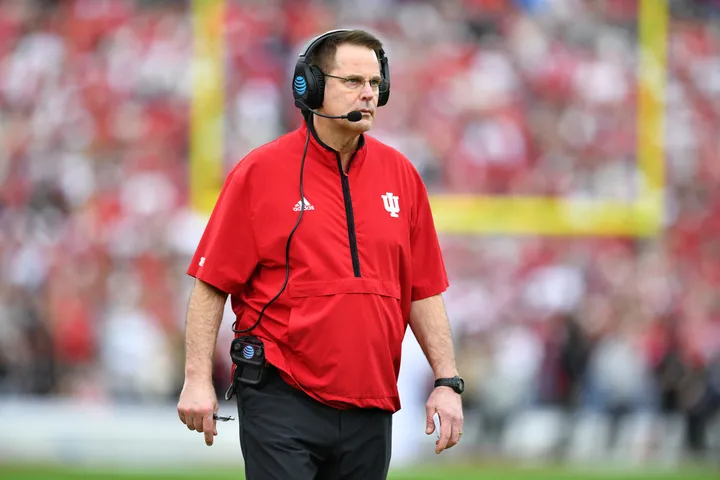
That is where unsung figures like Curt Cignetti enter the picture. Cignetti’s reputation is not about chasing stars. It is about building a football system that makes players better than the sum of their individual achievements. In just two seasons with the Hoosiers, he guided Indiana to one of the most coveted games in college football, the Rose Bowl. He arrived from James Madison in late 2023, leaving behind a 52-9 program he built over five years. When a coach defines expectations, simplifies decision-making, and builds trust across the roster, the quarterback does not have to be a superhero. He just has to execute.
The NFL tells a similar story, only louder.
Look at what is happening in Chicago. For years, the Bears chased talent. Quarterbacks, skill players, defensive pieces. The results never followed. What finally changed was leadership. Offensive architect Ben Johnson arrived from Detroit in January of 2025, and the vibe shifted immediately. He came to Chicago after directing the Lions to a franchise-record 409 offensive yards per game. More importantly, he brought clarity, adaptability, and edge to the Bears’ offense. He also managed to focus Caleb Williams, the Bears’ number one overall pick in 2024.
That clarity shows up late in games. Chicago has become the first NFL team to win six games when trailing with two minutes or less remaining. Wins under pressure like that are created long before Sunday. Red-zone plans. Two-minute drills. Situational reps. Williams, and the Bears, are thriving because those questions are already answered.
Great coaching also builds continuity as players come and go. No discussion of elite coaching is complete without Geno Auriemma at UConn. He did not inherit dominance. He built it. A former high school and assistant college coach who never played at the elite collegiate level, Auriemma is known for demanding precision, accountability, and mental toughness. Since arriving in Storrs in 1985, the Huskies have had only one losing season.
His teams are defined by habits. Crisp ball movement. Automatic shooting. Defensive communication. Players who understand why they are doing something, not just what they are doing. His teams look similar year after year for a reason. It is not simply because he plugs in talent annually. He finds good players who become great within his system.
Heading south, Dawn Staley offers a different but equally effective style of leadership at South Carolina. Staley was incredibly talented in her playing days. A three-time Olympic gold medalist and Hall of Fame point guard, she knows exactly what greatness feels like. Her genius lies in how she channels that experience into culture. South Carolina does not just win with stars. It wins with depth.
Players embrace roles. Rotations are trusted. Ego gives way to identity. It mirrors Herb Brooks’ Team USA philosophy. The name on the front matters more than the name on the back. Talent without structure leads to individual showcases and losing records. Staley’s program proves that when leadership is clear, talent compounds.
Think about the best leaders you know. They do the work behind the scenes. They clear paths for others. They deflect credit and define purpose. They are direct, authentic, and consistent. When teams fail despite elite talent, the issue is rarely effort or ability. It is almost always unclear leadership, inconsistent messaging, or systems that ask players to solve problems coaches should have solved first.
This is the distinction fans often miss. Talent is potential, not a finished product. It can stagnate, plateau, or explode depending on the environment. Great coaches do not just deploy talent. They develop it. They teach players how to see the game, manage pressure, and prepare when no one is watching.
In the end, the most dangerous teams are not the ones chasing influencer stars. They are the ones led by coaches who understand the flash, control the chaos, and know exactly what they are building and why.
Comments